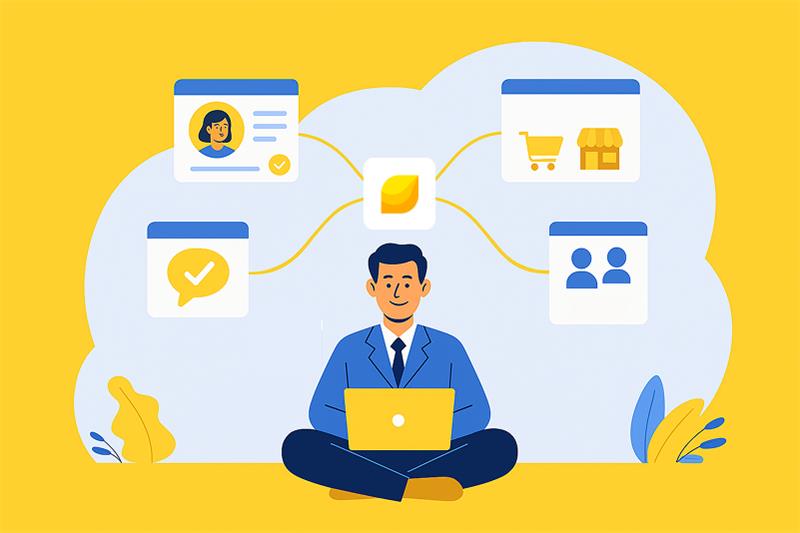
As companies grow, sustained sales growth hits a limit, especially if the sales team is not expanded. Companies usually partner with third parties to promote their product in such cases. That’s what we call channel sales.
As per stats, 64% of companies claim that channel sales partners have contributed to their annual growth. It is one of the best ways to skyrocket sales revenue figures without burning the pocket on fixed salaries. Read on to learn what are channel sales and how to find the best partners.
What is Channel Sales?
Channel sales, also known as indirect sales, refers to the strategy of partnering with third parties to sell the products or services of a company. The third party could be an affiliate marketer, broker, wholesaler, or distributor, or it can even happen in terms of alliances. For example, if you are a software company that develops a project management tool, you might partner with a consulting firm that specializes in helping businesses to boost your sales.
Also Read: What Are The 7 Proven Strategies To Retain Your Customers
5 Steps to Execute a Channel Sales Strategy
Outsourcing your sales does not mean that you can just sit back and relax. It includes conducting proper research to find the right channel sales partner and prepare them for success. Check out a step-by-step guide below:
“Building a sales channel is not just a one-time process but requires ongoing guidance. And that’s exactly where a CRM can guide you.”
1. Figure Out Your Requirements
Firstly, you must understand whether your company requires sales partnerships. Even though there are no suggested minimum criteria for setting up a channel sales model, you must ensure that the process is done at the right stage without causing any disruption to current sales. If you feel like this is the right time, fix specific goals for the purpose. Some of the most common goals are:
- Expand market reach
- Increase revenue and sales
- Gain a competitive edge
- Reduce sales and marketing costs
2. Find The Perfect Fit
Unfortunately, many companies that haven’t succeeded in channel sales distribution fail at finding the right channel sales partner. To avoid this, you must outline all the attributes that you expect from a sales partner. There must be clarity regarding these two crucial questions before getting started:
- What can you offer to your partners?
- What do you expect from your partners?
It is always better to outline these terms in a service-level agreement. This way, businesses can stay out of any miscommunication errors that may occur in the later phases.
3. Hiring and Recruiting
After figuring out the requirements, it’s time to hire the right partners. There are two main approaches to hiring:
- Inbound Recruitment: This is the type of recruitment process where you post a description and invite prospective partners to contact you. Finally, someone inside your company may scrutinize the application and choose the right fit.
- Outbound Recruitment: If your company identifies the best partners and contacts them directly to set up sales channel B2B, it is called outbound recruitment. Such an approach saves you valuable time.
Similarly, you may need an in-house team to manage the relationships with sales partners. Therefore, you must hire channel sales team leaders and managers to optimize the process.
4. Train Your Sales Partners
Even though your sales partners have experience in the field, they may not know the specifics of your company. Therefore, give proper guidance through in-depth handbook guides to explain your sales channel strategies. You must outline the following in the guides:
- Pricing Structure
- Product Features
- Sales Channels
- Partnership Goal
5. Support Your Sales Channel
Building a sales channel is not just a one-time process but requires ongoing guidance. Here are some ways to boost your channel sales strategy in the long run:
- Consistently give a well-structured pitch and presentation templates to improve their productivity.
- Build an online sales community for partners to solve all their queries.
- Offer pre-built content or even tools for those who don’t have an in-house marketing team.
Similarly, you can offer valuable incentives like bonuses and additional commissions or just celebrate partner successes to motivate them to perform better.
Why do you need a Sales Channel for Your Business?
More and more companies are adopting sales channels to optimize their business. Check out what are the benefits of channel sales:
- Increase the business revenue by exploring new markets.
- Cut down sales costs to raise the profit margins.
- Build user trust by choosing the most authentic partners.
- Improve brand awareness by using the goodwill of an external party.
- Increase user experience by cross-selling products that are relevant to them.
Conclusion
Finding and hiring the right sales partners is just the tip of the iceberg. The real task lies in managing the relationships throughout the sales channel cycle. And that’s exactly where a CRM can help you.
Onstro CRM is an advanced business software that can help you optimize your channel sales model. You can build an in-house information database that can guide all your sales partners right from onboarding to deal closing. Contact us now!